


November
Written by Michelle Jenkins of Florian’s Botanical
This November grow guide offers practical advice on forcing bulbs for Christmas, planting and caring for winter-flowering bulbs in the greenhouse, bringing colour and fragrance to your home through the festive season. Focusing on favourites like paperwhites, amaryllis, and hyacinths, it provides clear guidance on planting, watering, and positioning for successful winter blooms.

Meet the author
Hampshire horticulturist Michelle Jenkins of Florian’s Botanical restores her Victorian walled garden and shares practical tips and striking visuals online, from growing plants from seed to creating inspiring designs. To accompany the grow guide we filmed a video with Michelle planting paperwhite bulbs from the Grow Guide.

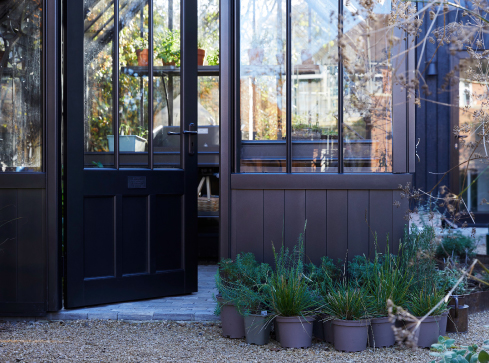
Michelle is the proud owner of an Alitex Tatton greenhouse from our National Trust range, powder-coated in Downland Stone with benching installed at both gable ends inside the structure. Follow this link to view a tour of the greenhouse.

Where to find out more
Instagram: @floriansbotanical
www.florians.co.uk
In November we’re celebrating the joy of forcing bulbs for christmas to bring festive colour and fragrance indoors and into your greenhouse. We’re delighted to share expert advice from Michelle Jenkins of @floriansbotanical, who guides us through choosing, planting and caring for beautiful winter bloomers that will brighten your home and set the stage for spring.
FAQs: Forcing bulbs for Christmas
Forcing bulbs simply means encouraging them to flower earlier than they naturally would. In the wild, many bulbs bloom in spring after a period of cold dormancy, but by controlling warmth, moisture, and light, you can bring them into flower during winter.
For Christmas displays, this allows you to enjoy colour and fragrance at a time of year when very little is naturally in bloom. It’s less about rushing the plant, and more about recreating the conditions that signal it’s time to grow.
Timing is one of the most important factors. Most bulbs need to be started in late October to early November to reliably flower in time for Christmas.
If you plant too late, the bulbs simply won’t have enough time to develop and bloom. Too early, and they may flower before you actually want them. This balance is why November is considered the key window for getting it right.
Not all bulbs respond well to forcing, so choosing the right varieties makes a noticeable difference.
Paperwhites, amaryllis, and hyacinths are commonly used because they respond reliably to indoor conditions and don’t always require a long cold period to trigger flowering. They also produce strong scent and visual impact, which is why they’re so closely associated with festive displays.
The process is similar to outdoor planting, but the environment is much more controlled. Bulbs are usually planted in pots with good drainage, using a free-draining compost.
What matters more here is positioning and environment. Once planted, bulbs are often kept somewhere cool and dark initially to encourage root development, before being moved into warmth and light to trigger flowering. This staged approach is what makes forcing successful.
When bulbs fail to flower, it’s usually down to timing or environmental conditions rather than the bulbs themselves.
Common issues include:
- Not enough time to develop before being brought into warmth
- Insufficient root growth due to skipping the cool, dark phase
- Inconsistent watering or overly dry conditions
Bulbs rely on stored energy, but they still need the right signals at the right time to convert that into flowers.
Once bulbs begin active growth, they need a bright position and steady warmth to develop properly. Too little light can result in weak, elongated stems, while excessive heat can cause rapid, short-lived blooms.
A balanced environment helps extend flowering time and improves the overall display, rather than pushing plants to bloom too quickly.
Yes, and a greenhouse can actually offer more control than indoor spaces. It provides natural light while still allowing you to manage temperature more precisely.
Many growers use the greenhouse for the early stages, then move pots indoors as buds begin to form. This approach gives you the best of both environments and allows you to time displays more accurately.
After flowering, bulbs are often treated as seasonal displays, especially varieties like paperwhites. However, some bulbs can be kept and replanted outdoors.
Allowing foliage to die back naturally helps the bulb recover energy, but it’s worth noting that forced bulbs may not perform as strongly in future seasons. For many gardeners, the focus is on enjoying them in the moment rather than long-term reuse.