


November
Written by Daryll Taylor
Welcome to the November instalment of our 2026 Alitex Growing Guides. This month, we’re joined by Daryll Taylor, Head Gardener at Thyme, a country estate and hotel in the Cotswolds, who shares his approach to seasonal growing and the art of winter gardening.
As the garden begins to settle into winter, Daryll explores the many ways to make the most of November in the garden. From protecting and enriching your soil to planting garlic, broad beans and spring bulbs, he shares practical advice on preparing for the year ahead. He also looks at growing under cover, harvesting seasonal produce and caring for dahlias through the colder months, offering inspiration and insight into how thoughtful preparation now can help create a healthier, more productive garden in the seasons to come.

Drawing on his experience at Thyme, Daryll shares practical advice on preparing the garden for winter, from improving soil health and planting seasonal crops to protecting dahlias and making the most of growing under cover. He also offers insight into planning ahead, working with the seasons and creating a healthy, productive garden for the year to come.

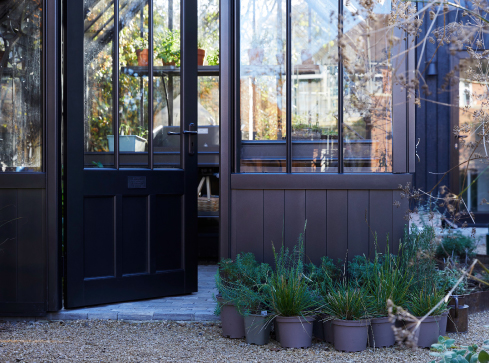
We loaned our Mottisfont greenhouse, set on a Wainscot base and finished in Greensand, to Thyme in the Cotswolds as part of a special greenhouse residency. From our National Trust Collection, the greenhouse provided a beautiful and practical space for growing under cover, offering an opportunity to explore propagation, seasonal planting and the benefits of extending the growing season.
Where to find out more
Instagram: @thyme.england
Website: www.thyme.co.uk
As November arrives, attention turns to preparing the garden for winter and the year ahead. Daryll Taylor, Head Gardener at Thyme, shares practical advice on caring for soil, planting seasonal crops and bulbs, protecting dahlias and making the most of growing under cover, with plenty of inspiration for creating a healthy, productive garden for the seasons to come.
FAQs: November Growing
Many hardy annual seedlings can be overwintered in an unheated greenhouse or cold frame, where they benefit from shelter while still experiencing naturally cool conditions. Once seedlings are large enough to handle, some can be moved into 9cm pots and grown on under glass.
Keep young plants somewhere bright and well ventilated and continue monitoring them during severe weather. An unheated greenhouse provides useful protection, but it doesn’t guarantee that every young seedling will survive a hard frost, so particularly cold spells may require additional protection.
Rather than watering seeds to a fixed schedule, check the compost regularly and respond to the conditions. Seeds need consistent moisture to germinate, but overly wet compost can encourage them to rot while allowing it to become too dry can prevent successful germination.
Milli recommends initially watering seed trays from underneath, allowing the compost to absorb what it needs before removing the tray from the water. Once seedlings are established, they can be watered from above with a very fine rose. A simple way to judge moisture is to pick up the tray or pot — if it feels particularly light, it probably needs watering.
Not every seed should be covered after sowing because different varieties require different conditions to germinate. Some seeds need exposure to light, while others germinate more successfully in darkness, making it important to follow the instructions for the particular variety rather than using the same method for everything.
Phlox, for example, requires darkness to germinate. Milli suggests covering the seeds with cardboard or placing them somewhere dark while continuing to monitor moisture. Once seedlings emerge, remove the covering and move them into good light.
The best method depends on the type and size of seed. Individual cells or modules can work well for larger seeds and make germination easier to monitor, while finer seeds can be sown into seed trays provided they aren’t sown too densely.
Some flowers dislike having their roots disturbed. Poppies and nigella, for example, are often better suited to direct sowing. If they are started in containers and transplanted later, their roots should be handled particularly carefully.
Allow seeds to mature properly on the plant before collecting them. Signs vary between varieties, but dry or browning seed heads and well-developed seeds can indicate that they are approaching maturity. Milli recommends watching when plants naturally begin dispersing seed as another useful indication that they’re ready.
Once collected, seed heads can be dried somewhere with good ventilation before the seeds are separated from the surrounding plant material. Most importantly, make sure seeds are thoroughly dry before storing them in labelled paper bags somewhere cool, dry and dark until you’re ready to sow them. Cosmos, nigella and poppies are particularly good plants for learning how to save seed.
Not necessarily. Open-pollinated varieties can remain true to type when appropriately maintained, but cross-pollination between varieties can introduce differences. Seeds saved from hybrids can also produce plants that differ from their parents.
Milli embraces this variation rather than treating it as a failure. Her cosmos, for example, can produce different colours or forms where cross-pollination has occurred. An unusual colour, shape or particularly attractive flower can become something worth observing and potentially saving seed from again, making experimentation part of the enjoyment of growing from seed.