


September
Written by Richard Taylor
Welcome to the September instalment of our 2026 Alitex Growing Guides, written by Richard Taylor, co-founder of Taylor Tripp Garden Design with Nick Tripp. Their garden at Buckholt showcases their approach to garden design, combining traditional English planting with productive growing, while increasingly creating a haven for wildlife and biodiversity.
As summer draws to a close, Richard shares practical advice on preparing for autumn and winter, extending the growing season and making the most of the warmth and protection provided by their Alitex Hidcote greenhouse. From sowing winter salads and hardy crops to overwintering plants, there are plenty of ways to keep growing under glass as temperatures begin to fall.

Drawing on lessons from this year’s exceptionally hot, dry summer, Richard also explores improving soil, retaining moisture and choosing plants that can cope with increasingly extreme conditions. He shares his approach to encouraging wildlife and allowing a little more wildness in the garden, alongside plenty of inspiration to keep experimenting and trying something new.
Watch the video to hear more from Richard…

Where to find out more
Instagram: @taylortrippgardendesign
Website: www.taylortripp.co.uk
FAQs: September Growing
September is still a productive sowing month because there is usually enough residual warmth under glass for crops to establish before winter. Richard recommends winter salads and hardy crops, with varieties such as ‘Winter Density’ lettuce, ‘Valdor’ spinach and ‘Nero di Toscana’ or ‘Red Russian’ kale particularly suited to extending the season.
The greenhouse is especially useful when outdoor conditions aren’t cooperating. After a very dry summer at Buckholt, for example, the soil was too hard for reliable sowing, so starting crops under glass provides a controlled alternative while conditions outside recover.
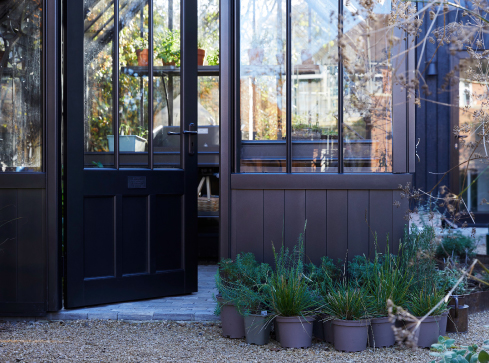
An unheated greenhouse can considerably extend the growing season by sheltering plants from wind, heavy rain and the coldest outdoor conditions. Richard continues growing salad leaves, basil and late crops into autumn and uses the greenhouse to experiment with which plants can overwinter without additional heat.
Rather than assuming everything needs heating, choose hardy crops and observe how they respond to your particular greenhouse and local climate. Tender plants will still need greater protection, but an unheated greenhouse can remain a useful growing space well beyond summer.
Start by improving the soil’s ability to hold water rather than simply increasing how often you irrigate. Richard recommends adding organic matter and mulch in September, which helps protect the soil over winter while gradually improving its structure and moisture retention.
Mulching also reduces the amount of bare soil exposed to sun and evaporation. Where drought is becoming a recurring problem, building healthier, moisture-retentive soil provides a better long-term solution than relying entirely on additional watering.
Carefully planned, denser planting can shade the soil and reduce the amount of moisture lost through evaporation. At Buckholt, Richard is experimenting with mixing flowers amongst productive crops rather than maintaining regimented rows separated by large areas of bare ground.
He describes the result as resembling a miniature forest floor, where plants collectively shade the soil and create a more protected microclimate. The aim isn’t overcrowding; plants still need adequate light, airflow and root space. Instead, it’s about questioning whether every patch of exposed soil actually needs to be exposed.
Rather than completely changing the character of an English garden, Richard recommends broadening the planting palette and observing which species perform well during increasingly hot, dry summers. At Buckholt, this includes experimenting with plants such as salvias, gauras and Californian poppies.
September is a useful time to assess what survived the summer with minimal intervention. Make a note of plants that remained healthy during dry periods and use that experience when planning future borders; plants already succeeding in your particular conditions provide valuable evidence about what is likely to work again.
Leaving selected plants standing through autumn can be far more valuable to wildlife than clearing everything as soon as flowering finishes. Richard recommends leaving plants such as calendula, fennel, yarrow and flowering herbs where appropriate, as their remaining flowers can support insects while seedheads provide food for birds.
This doesn’t mean leaving the entire garden unmanaged. A more considered approach is to remove material that is diseased, problematic or genuinely needs clearing while retaining useful seedheads, flowers and habitat elsewhere.
Autumn gardening doesn’t have to mean making every border perfectly tidy. Leaving some seedheads, areas of longer vegetation and undisturbed habitat provides food and shelter at a time when natural resources are beginning to decline.
The experience at Buckholt demonstrates how these individual decisions can add up. Its pond, meadows, trees, productive garden and borders now support frogs, newts, toads, insects and numerous bird species. The practical lesson is to think about what wildlife might lose before clearing an area, rather than automatically removing everything at the end of summer.